Buying medication in a Spanish-speaking country can be challenging if you don’t speak Spanish fluently. You might recognize the medication you need but struggle to explain what you’re looking for, understand the pharmacist’s questions, or follow the instructions on the package.
Whether you’re traveling through Latin America or living abroad, knowing a few basic Spanish phrases can make visiting a pharmacy much easier.
This guide covers practical expressions you can use when speaking with a pharmacist, from asking whether a medication is available to discussing alternatives, prescriptions, and dosage instructions.
1. Asking If a Medication Is Available
If you’re looking for a particular medication, start by asking whether the pharmacy carries it.
Here are some useful expressions:
| Spanish | English |
|---|---|
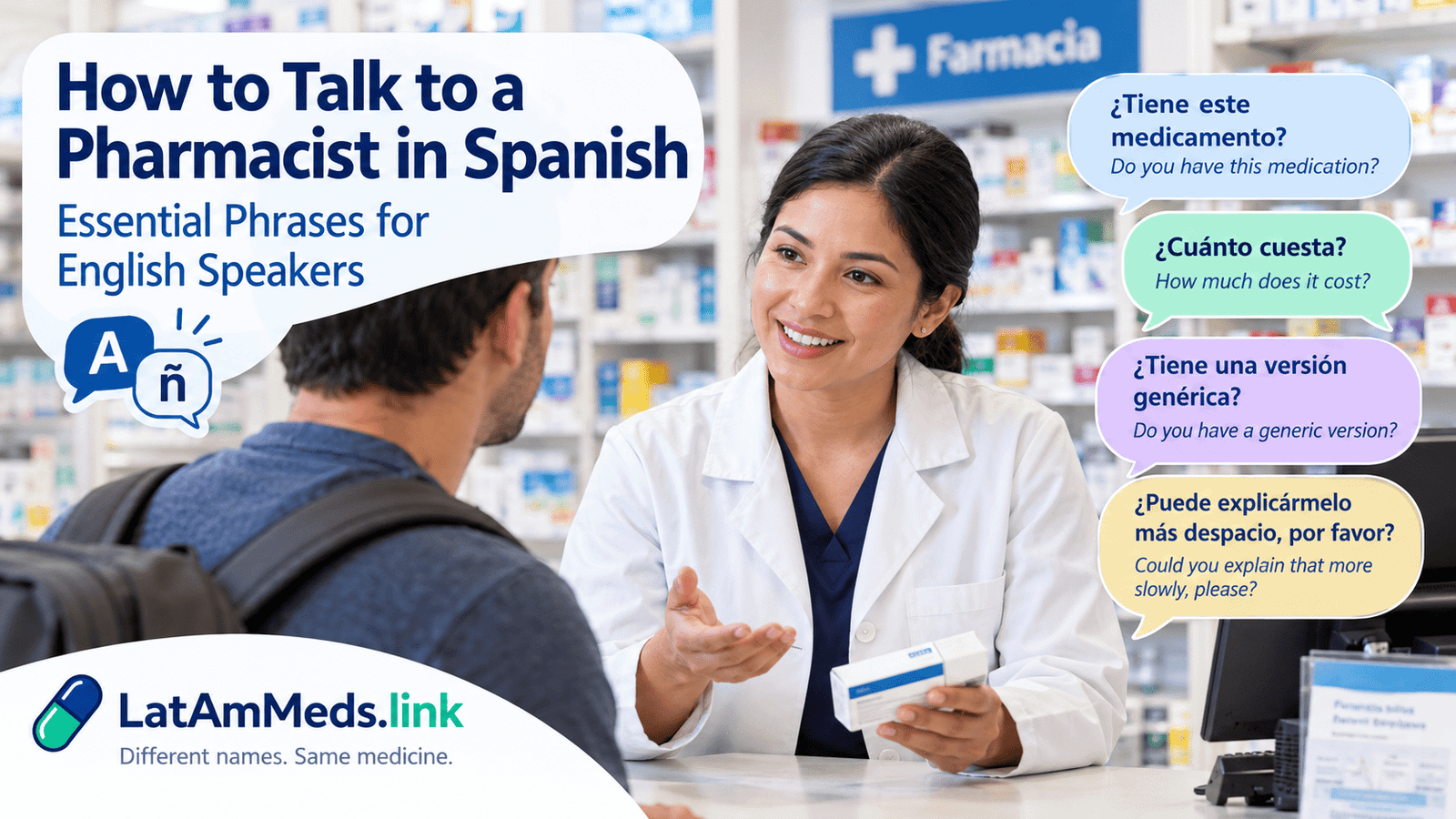
| ¿Tiene este medicamento? | Do you have this medication? |
| ¿Lo tiene disponible? | Is it available? |
| Estoy buscando este medicamento. | I’m looking for this medication. |
| ¿Lo venden sin receta? | Do you sell it without a prescription? |
| ¿Necesito una receta médica? | Do I need a prescription? |
| ¿Tiene otra presentación? | Do you have another formulation or presentation? |
If you know the medication by its brand name in your home country but can’t find it locally, try asking:
“¿Existe algún medicamento equivalente?”
Is there an equivalent medication?
This is particularly useful when brand names differ between countries. A medication sold under one name in the United States might have a completely different brand name in Guatemala, Mexico, or Colombia.
You can also show the pharmacist a photograph of the original packaging or a copy of your prescription.
2. Explaining Which Medication You Normally Take
If you take medication regularly, you’ll want to explain exactly what you’re looking for.
These phrases can help:
| Spanish | English |
|---|---|
| Tomo este medicamento regularmente. | I take this medication regularly. |
| Llevo varios años tomando este medicamento. | I’ve been taking this medication for several years. |
| Este es el medicamento que utilizo habitualmente. | This is the medication I normally use. |
| Normalmente tomo una tableta al día. | I normally take one tablet a day. |
| Es el mismo medicamento que tomo en mi país. | It’s the same medication I take in my home country. |
| Necesito comprar más medicamento. | I need to get more medication. |
You might also ask:
“¿Este medicamento tiene otro nombre comercial?”
Does this medication have a different brand name?
This is helpful when you’re familiar with a medication in your home country but don’t recognize the products available locally.
Whenever possible, know the generic name or active ingredient as well as the brand name. This makes it easier for the pharmacist to identify the product you’re looking for.
3. Asking About Generic Medications and Alternatives
Medication brands and generic names vary considerably across countries. In Latin America, pharmacies often carry both branded and generic products.
If you’re looking for a less expensive option or trying to identify an equivalent product, these phrases are useful:
| Spanish | English |
|---|---|
| ¿Tiene una versión genérica? | Do you have a generic version? |
| ¿Tiene la versión genérica disponible? | Is the generic version available? |
| ¿Contiene el mismo principio activo? | Does it contain the same active ingredient? |
| ¿Existe una alternativa más económica? | Is there a less expensive alternative? |
| ¿Cuál es la diferencia entre estos dos medicamentos? | What’s the difference between these two medications? |
| ¿Cuál me recomienda? | Which one do you recommend? |
For example, acetaminophen is commonly called paracetamol in many Spanish-speaking countries. If you’re looking for it in a pharmacy, asking for paracetamol will generally be more useful than using the U.S. name.
However, don’t assume that two medications are interchangeable just because they contain the same active ingredient. Strength, formulation, additional ingredients, and release characteristics can differ.
Ask the pharmacist to confirm whether the products are appropriate alternatives before making a substitution.
4. Explaining Allergies and Other Medications You Take
Communicating allergies and existing medications is particularly important when purchasing something new.
Here are some phrases worth learning:
| Spanish | English |
|---|---|
| Soy alérgico a la penicilina. | I’m allergic to penicillin. |
| Tengo alergia a un medicamento. | I have a medication allergy. |
| Actualmente tomo otros medicamentos. | I’m currently taking other medications. |
| ¿Este medicamento puede interactuar con los otros que tomo? | Can this medication interact with the other medicines I take? |
| ¿Este medicamento tiene efectos secundarios? | Does this medication have side effects? |
| ¿Puedo tomarlo junto con mi otro medicamento? | Can I take it with my other medication? |
If you have a known allergy, explain which medication causes it and, if possible, what reaction you’ve experienced.
For example:
“Soy alérgico al ibuprofeno. Me produce una erupción en la piel.”
I’m allergic to ibuprofen. It causes a skin rash.
If you’re unsure how to describe an allergy or medical reaction in Spanish, consider writing it down or showing the pharmacist a translated note.
Don’t rely on a vague description when discussing a potentially serious allergy.
5. Understanding How to Take Your Medication
Once you’ve identified the medication, make sure you understand how to use it.
These questions are particularly useful:
| Spanish | English |
|---|---|
| ¿Cómo debo tomar este medicamento? | How should I take this medication? |
| ¿Cuántas tabletas debo tomar? | How many tablets should I take? |
| ¿Con qué frecuencia debo tomarlo? | How often should I take it? |
| ¿Debo tomarlo con alimentos? | Should I take it with food? |
| ¿Debo tomarlo antes o después de las comidas? | Should I take it before or after meals? |
| ¿A qué hora del día debo tomarlo? | What time of day should I take it? |
| ¿Durante cuánto tiempo debo tomarlo? | How long should I take it? |
| ¿Qué debo hacer si olvido una dosis? | What should I do if I miss a dose? |
If the pharmacist explains something too quickly, you can ask:
“¿Podría explicármelo más despacio, por favor?”
Could you explain that more slowly, please?
Another useful expression is:
“¿Podría escribirme las instrucciones?”
Could you write down the instructions for me?
Don’t leave the pharmacy until you understand the dosage, frequency, and relevant precautions. If you’re uncertain about an instruction, ask the pharmacist to clarify it rather than guessing.
6. Asking About Prescriptions and Refills
Prescription requirements vary between countries and between individual medications.
In some Latin American countries, certain medications may be available without a prescription even though similar products require one in the United States. Other medications remain subject to prescription requirements or additional restrictions.
These phrases can help you navigate the process:
| Spanish | English |
|---|---|
| Tengo una receta médica de mi país. | I have a prescription from my home country. |
| ¿Aceptan recetas extranjeras? | Do you accept foreign prescriptions? |
| ¿Puedo comprar este medicamento sin receta? | Can I buy this medication without a prescription? |
| Mi receta ha vencido. | My prescription has expired. |
| Necesito renovar mi receta. | I need to renew my prescription. |
| ¿Cuántas renovaciones me quedan? | How many refills do I have left? |
| ¿Puede comunicarse con mi médico? | Can you contact my doctor? |
If you’re continuing a treatment that started in your home country, bring your prescription and the original medication packaging whenever possible.
Keep in mind that having a prescription from another country doesn’t automatically mean it can be used to purchase medication locally. Requirements differ depending on the country and medication.
7. Asking for Help in English
Even if you know some Spanish, there may be times when you need additional assistance.
You can ask whether someone at the pharmacy speaks English:
| Spanish | English |
|---|---|
| ¿Alguien aquí habla inglés? | Does anyone here speak English? |
| ¿Hay algún farmacéutico que hable inglés? | Is there an English-speaking pharmacist? |
| ¿Hay algún intérprete disponible? | Is an interpreter available? |
| ¿Puede explicármelo en inglés? | Can you explain it to me in English? |
| ¿Puede escribirlo para que pueda traducirlo? | Can you write it down so I can translate it? |
Not every pharmacy will have English-speaking staff, particularly in smaller towns or rural areas. A translation app can help with basic communication, but it shouldn’t replace professional clarification of medication instructions.
8. A Few Tips Before Visiting a Pharmacy
A little preparation can make your pharmacy visit much easier.
If you’re looking for a medication you regularly use, bring a photograph of its original packaging or write down its generic name, active ingredient, and strength.
If you have a prescription, keep a copy available. A pharmacist may be able to identify the medication more easily from the original instructions than from a brand name alone.
It’s also useful to keep a list of your current medications and any known allergies. This information can help the pharmacist identify potential interactions or other concerns.
If you’re looking for an alternative to a medication from your home country, explain what you normally take and why you need it. Let the pharmacist confirm whether a suitable alternative exists.
Finally, remember that medication regulations vary across Latin American countries. Don’t assume that a product available without a prescription in one country will have the same status elsewhere.
Communicating More Confidently at the Pharmacy
You don’t need to be fluent in Spanish to visit a pharmacy in Latin America, but knowing a few practical expressions can make a significant difference.
Being able to ask about availability, explain allergies, discuss generic alternatives, and understand dosage instructions helps you communicate more effectively and make better-informed decisions about your medication.
If you’re unsure about a medication’s name in another country, LatAmMeds.link can help you explore differences between English and Spanish medication names.
Use it as a starting point for identifying products, but always confirm the ingredients, dosage, and suitability of a medication with a qualified pharmacist or healthcare professional.
This article is for informational purposes only and does not replace medical advice or instructions from a qualified healthcare professional.